Silk Road: History and Secrets of Northwest China

Discover the history of the Silk Road before you set off. Between deserts, ancient cities, and Uyghur culture, immerse yourself in the authenticity of the Northwest.

BLOG: NORTHWEST CHINA

1/3/202610 min read

Grotte de Mogao
Grotte de Mogao

Northwest China is one of the country’s most fascinating and vast regions. It is here that the ancient Silk Road unfolds—a 2,000 km corridor crossing Shaanxi, Gansu, and Xinjiang, once linking the Middle Kingdom to the Mediterranean. In 2026, this region has become an essential destination for those seeking an authentic China, far from the skyscrapers of Shanghai.

🏛️ The Cradle of History: Xi'an

It all begins in Xi'an, the ancient Chang'an. This was the starting point for camel caravans loaded with silk.

  • Must-see: The Terracotta Army of Emperor Qin Shi Huang.

  • Vibe: The Muslim Quarter (Hui Min Jie) with its scents of cumin, oven-baked flatbreads, and its Great Mosque featuring a hybrid Sino-Arabic architectural style.

🏜️ The Gansu Corridor: Between Desert and Sacred Caves

This is a narrow strip of land between the Tibetan Plateau and the Gobi Desert.

  • Dunhuang: The pearl of the Silk Road. The Mogao Caves house thousands of Buddha statues and millennial murals.

  • Experience: Riding a camel across the Singing Sand Dunes at sunset to see the Crescent Moon Lake.

  • Zhangye: Famous for its "Rainbow Mountains" (Danxia Landform), geological formations with surreal colors.

🕌 Xinjiang: The Gateway to Central Asia

Here, the faces change, and so do the languages. You enter the heart of Uyghur culture.

  • Kashgar: The most mythical oasis city. Its Sunday market is one of the largest livestock markets in the world, remaining almost unchanged for centuries.

  • Turpan: The lowest and hottest city in China. Here, you can visit vineyards irrigated by Karez (millennial underground water systems) and the ruins of the ancient cities of Jiaohe and Gaochang.

🧭 Why go in 2026?

  • The Silk Road Bullet Train: The high-speed rail line now connects Xi'an to Urumqi in record time, making the desert accessible in just a few hours.

  • Total Change of Scenery: Unlike the tropical South, the landscape here is made of steppes, snow-capped peaks (like Muztagh Ata), and salt deserts.

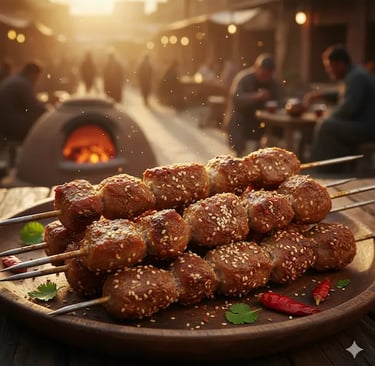
  • Gastronomy: This is lamb paradise. Don’t miss the Yangrou Chuan (cumin lamb skewers) and Lagman (hand-pulled noodles).

💡 Travel Tips

  • Budget: Count on approximately $85 to $130 per day for a comfortable tour. The distances are immense.

  • Climate: Very dry. Prefer May-June or September-October. In summer, Turpan is a veritable furnace (over 104°F/40°C).

  • Safety: Checks are frequent in Xinjiang; always keep your passport with you.

a large building with a green and white roof

The Northwest: Tips, Itineraries, and Immersion on the Silk Road 🐪✨

Introduction: The Call of the Arid Lands

Before treading the sands of the Gobi or climbing the steps of sacred caves, you must understand that Northwest China is not just a trip; it is a crossing. Here, space and time dilate. You leave the China of skyscrapers for that of caravanners, mud cities, and snow-capped peaks that touch the Central Asian sky. This is the most authentic region of the country, where the scent of cumin replaces that of jasmine, and where every step on the Silk Road tells the story of two thousand years of exchange between East and West.

🧭 How much time to plan?

The distances are colossal. For true immersion without spending all your time in transit:

  • The Essentials (7 to 9 days): Focuses on the Xi'an – Gansu axis. Ideal for seeing the Terracotta Army and the Dunhuang caves.

  • The Complete Experience (15 to 18 days): This is the time needed to push all the way into Xinjiang. It is the journey of a lifetime that takes you from the ancient imperial capital to the markets of Kashgar, on the border of Pakistan and Kyrgyzstan.

📍 Must-Visit Places (AsiaOnTheWay’s Selection)

1. Xi’an: The Gateway Through Time

This is where it all begins. Before it was a modern city, it was Chang'an, the starting point for the caravans.

  • To do: Cycle along the ancient city walls and get lost in the Muslim Quarter after dark.

2. Zhangye: The Rainbow Mountains

A unique geological spectacle within the Danxia Park. Mountains streaked with red, orange, and yellow, as if a painter had brushed the earth.

3. Dunhuang: The Mystic Oasis

This is the pivot of the Silk Road.

  • Must-see: The Mogao Caves, a Buddhist library carved into the rock, and the giant dunes surrounding the Crescent Moon Lake.

4. Kashgar: The Soul of Central Asia

Located in the far west of Xinjiang, this is the most exotic city in China.

  • Must-see: The Sunday livestock market and its labyrinthine old town, where you can sip cardamom tea while watching copper craftsmen at work.

💡 Our Expert Tips for 2026

  • Climate is your compass: The Northwest is a region of extremes. In summer, Turpan is a "furnace" (113°F / 45°C), while desert nights can be freezing. May, June, and September are the golden months.

  • Speed vs. Poetry: The high-speed train (HSR) now connects Xi'an to Urumqi. It’s convenient, but if you have the time, take a classic sleeper train to watch the infinite steppe landscapes roll by.

  • The language barrier: In Xinjiang, Mandarin is often the second language after Uyghur. Download an offline translation app.

  • Budget: Plan for approximately $90 to $140 per day. The cost of living is lower than in Shanghai, but desert excursions and internal flights will increase the total.

Yangrou Chuan
Yangrou Chuan
To travel with peace of mind in the Northwest and along the Silk Road in 2026, a well-prepared smartphone is essential. China's digital ecosystem is unique: while some global apps are blocked, local alternatives are ultra-efficient.

Here is a list of legal, free, and essential apps for your journey:

💳 Payment and Daily Life (Essential)

In China, cash and physical credit cards have become rare. Everything is done via QR Code.

  • Alipay (International Version): The #1 app for foreigners. You can link your foreign Visa or Mastercard. It allows you to pay for everything, scan codes for entry at tourist sites, and use built-in "Mini-apps."

  • WeChat (Weixin): Vital for communicating with guides or hotels. The WeChat Pay function now also accepts foreign cards.

🗺️ Navigation and Maps

Forget Google Maps (imprecise and often blocked).

  • Amap (Gaode): The Chinese "Google Maps." Ultra-precise, even in the remote oases of Xinjiang. Tip: The interface is in Chinese, but you can copy-paste character addresses or use visual icons.

  • Apple Maps: If you have an iPhone, this is the only Western map app that works perfectly in China (it uses Gaode’s data) and is available in English/French.

🚄 Transport and Reservations

  • Trip.com (International Version): The most reliable platform for travelers. Essential for booking HSR (High-Speed Rail) tickets on the Silk Road and domestic flights to Kashgar or Urumqi. The English-language customer service is excellent.

  • DiDi (Integrated in Alipay): The Chinese "Uber." Essential for getting around cities or reaching outlying sites like the Mogao Caves. You can set the interface to English.

🗣️ Translation and Communication

  • Baidu Translate: Highly effective for Chinese. It features a "Photo" mode to translate street food menus and a voice mode for chatting with locals.

  • Microsoft Translator: An excellent alternative that allows you to download language packs for offline use (very useful in desert areas without network coverage).

🏨 Accommodation

  • Booking.com: Useful, but be careful: check the description to ensure the hotel is authorized to "accept foreign guests."

  • Trip.com (Again): Often more efficient for finding authentic hotels in Gansu or Xinjiang that legally accept international travelers.

💡 AsiaOnTheWay’s Pro Tip for 2026:

Before you leave, install a travel eSIM (such as Airalo or Holafly) or activate an international pass with your carrier. This often allows you to access your usual apps (WhatsApp, Instagram, Google) without needing a VPN, as you are using international roaming.

three brown camels during daytime

The Northwest: More Than a Destination, an Odyssey ✨

In short, venturing into Northwest China means accepting the loss of your bearings to better find yourself. It is trading the hustle and bustle of the Pacific coast for the sacred silence of Buddhist caves and the immensity of the Central Asian plateaus. This region is not just visited; it is felt—through the taste of a fresh-from-the-oven nan bread, the sun's reflection on the Rainbow Mountains, or the distant call of an imaginary caravan on the dunes of Dunhuang.

Before diving deeper into our upcoming articles—where we will explore city by city the secrets of Xi'an, the mysteries of Gansu, and the legendary oases of Xinjiang—here is a brief introduction to this page, to help you soak up the unique atmosphere of this incredible place. Let the images speak and prepare yourself: the Silk Road is waiting for you. 🐪🗺️

Nomadic Heritage: Trekking and Temples on the Paths of History

Northwest China is a land shaped by the great Chinese Dynasties and the powerful imprint of Nomads. If you seek adventure, hiking on the remote trails of this province is an incomparable experience. Far from Beijing and the tumult of the Pacific Ocean, the Mongolian influence here is palpable. Through trekking, you discover forgotten temples and the legacy of the great Khans. The Tian Shan Mountains offer grandiose landscapes worthy of a National Park, where wild nature dominates. The region is an Asian crossroads, rich with exchanges along the New Routes from Bactria toward the Indian Ocean. This is why the UNESCO World Heritage sites are so dense here, from caves to ancient cities. Unlike the rice paddies of the South or the lakes of Southeast Asia, the immensity of the steppes and the yurt culture of Inner Mongolia are omnipresent.

The immersion continues toward the reaches of the Altai, where the influence of the Mongol people and nomadic horsemen is most powerfully expressed. Crossing the vast steppes, one realizes that this region was the beating heart of the Mongol Empire, especially under the Yuan Dynasty, whose legacy still connects Beijing to the distant lands of Persia. In these Mongolian steppes, nomadic life is not folklore but a daily reality for the herders who guide their herds across the Mongolian steppe.

Near a monastery nestled in the valleys of North China, you will discover a fervent practice of Buddhism, recalling the close ties between local tribes and Tibet. The monks, guardians of a millennial Mongolian culture, stand alongside more recent influences, sometimes marked by the former Soviet past or the proximity of the Kirghiz world. A trip to Inner Mongolia means sleeping in traditional yurts and feeling the soul of this land of steppes nomads. Whether you arrive from Ulaanbaatar or follow an imaginary Yellow Cruise in the footsteps of explorers, the welcome of the Mongolian populations remains a constant, offering a striking contrast to Thai landscapes or southern jungles, thus affirming the incredible diversity of Jinping's China.

📍 ASIA ON THE WAY – Practical Information Guide to Asia

🌐 Website: https://asiaontheway.com

📧 E-mail: contact@asiaontheway.com

💬 Personalized advice, tailor-made itineraries, and local tips for traveling differently in Asia year-round, even off-season.

Frequently Asked Questions (FAQ): Meeting the Nomadic World 🧭

When is the best time for a first scouting trip to the steppes?

For a first scouting trip, prioritize the period from June to September. This is when the pastures are at their greenest and the nomadic population sets up their summer camps in the high valleys.

What is life like within a nomadic family?

Sharing the daily life of a nomadic family means discovering the legendary hospitality of nomadic peoples. You will sleep in a traditional felt Mongolian yurt, which is both insulating and sturdy. The pace is dictated by nomadic herding: milking the animals, caring for the Mongolian horse, and watching over the herd of sheep.

Can you go horseback riding in the region?

Absolutely. Horseback riding is the original mode of transport in this region. Whether through the plains that stretch as far as the eye can see or in a steep canyon in Xinjiang, the horse allows you to access areas of taiga inaccessible by vehicle. This is the very essence of trekking in Central Asia.

What are the religious and cultural influences?

The Northwest is a spiritual crossroads. You will find many monasteries and a strong Buddhist community, where Buddhists practice their millennial rites. But it is also a land of diversity where Mongols, Kazakhs, and Kazakh culture coexist, creating a bridge between the Mongolian steppes and the steppes of Kazakhstan.

Is it difficult to communicate with a nomadic tribe?

The Mongolian language and Kazakh are the preferred languages of nomadic shepherds and nomadic herders. While Mandarin is understood in the towns, having some basic notions or using a translator is a plus for interacting with a nomadic tribe in the heart of the camp.

What landscapes do you cross during a hike in the Northwest?

The diversity is striking: you will go from a glowing canyon across the desert to wide-open spaces reminiscent of the wild steppe. It is a constant alternation between the aridity of the plains and the freshness of Mongolian yurts set up near mountain lakes.

Is the region historically part of Ancient China?

The geography of Western China has been a strategic crossroads for millennia. Since the Han Dynasty, the region served as a vital gateway for Eurasian trade. Later, during the Tang Dynasty, the empire expanded its influence deep into Eurasia, while the Great Wall was fortified by the Ming Dynasty to protect the heartland from nomadic tribes. It was eventually fully integrated under the Qing Dynasty, creating the complex provincial borders we see today.

What is the cultural makeup of this Autonomous Region?

As an Autonomous Region, the area is a mosaic of identities. While Han Chinese make up a significant portion of the populated oases, the land is home to Uighur communities, Mongolians, and Tibetans. This cultural civilization is further enriched by Turkic roots and the long-standing presence of Islam, which arrived via ancient trade routes from the Persian world.

What makes the geography of the Tarim Basin so unique?

The Tarim Basin is one of the most extreme environments in Ancient China. Surrounded by the Altai Mountains and the Kunlun range, this arid depression was the site of many a historic expedition. Its harsh geography acted as a natural barrier that was only conquered by those who mastered the desert's secrets, linking the Communist era's modern infrastructure to the ancient paths of the Silk Road.

How did the various dynasties influence the nomadic lifestyle?

Throughout history, from the Republic of China back to the earliest emperors, the Chinese government has had a complex relationship with the nomad populations. Nomadic tribes often moved freely between Outer Mongolia and Siberia, living in traditional tents and following the seasons. Over time, these groups were influenced by the Siberian climate and the shifting borders of the Eurasian steppe.

Are there still traces of the Great Wall and ancient forts in the North?

Yes, the remnants of the Great Wall stretch far into the Northwest, marking the historical limit of settled civilization. In these remote areas, the wall was often built with rammed earth rather than stone. Today, travelers can explore these ruins, which stand as silent witnesses to the era when the Ming Dynasty and earlier empires sought to manage the movements of Mongolians and other northern groups across the vast desert landscape.