Phnom Penh: Duty of Remembrance, Urban Renaissance Part 3

Phnom Penh: between the emotion of Tuol Sleng (S-21) and Choeung Ek, and the vitality of the Royal Palace and Central Market. Discover our tips for transport and accommodation in the Cambodian capital.

BLOG CAMBODIA

12/3/202511 min read

1.The Hook and the Beginning of the Journey: Cambodia, So Much More Than a Destination.

2.The Majesty of History: Angkor Wat — How to Avoid the Crowds.

3.The Beating Heart and the Memory: Phnom Penh, Between Past and Urban Renaissance.

4.The Gentle Escape: Slow Travel in Kampot and Kep (Pepper, Beaches, and Rice Fields).

5.Culture, Cuisine, and Conclusion: The True Taste of Cambodia and Responsible Tourism.

Phnom Penh: Where History and Life Become One

After the wonder of ancient temples and the life lessons they inspire, our journey through Cambodia leads us to the vibrant heart of the country: Phnom Penh.

Far from the spiritual atmosphere of Angkor, the capital is a place where urban bustle and the silence of remembrance coexist powerfully. Here, the country confronts visitors with its recent history—the era of the Khmer Rouge—through the essential visits to Tuol Sleng (S-21) and Choeung Ek.

But Phnom Penh is also a city looking toward the future: the splendor of the Royal Palace, the organized chaos of the Central Market, and the joyful energy along the Mekong River all prove this brilliantly.

This chapter guides you through the fragile balance between remembrance and renewed vitality, offering essential practical tips for navigating this fascinating city. Prepare for an emotionally rich experience.

1. The Weight of Remembrance: Tuol Sleng (S-21) and the Echo of Horror

Phnom Penh cannot be understood without paying tribute to its darkest chapter—a difficult but essential step for any mindful traveler. The Tuol Sleng Genocide Museum, formerly Srey Soriya High School, was transformed by the Khmer Rouge regime into Security Center 21 (S-21), the main facility for detention, torture, and interrogation. The visit is far from pleasant, but it is indispensable. The site has been kept almost entirely in its raw state: rusting barbed wire, tiny brick cells, and exposed torture instruments create an immediately oppressive atmosphere. As you walk the corridors, you are confronted with thousands of photographs of victims, pinned to the walls. These faces—often innocent, confused, or defiant—turn abstract statistics into individual tragedies, reminding visitors that S-21 was the final stop for roughly 20,000 people before execution. This act of remembrance, overseen in part by survivors and families, ensures that the horror is never forgotten. The site forces deep introspection about human cruelty but also, through the documentation preserved here, bears witness to Cambodia’s ongoing effort to confront its past.

The Architecture of Confinement

The building’s original identity as a school, later transformed into a high-security prison, adds an eerie dimension. Classrooms were subdivided into cramped brick cells, and the larger rooms were used for interrogations. The balcony railings—once supports for student life—were covered in barbed wire to prevent escape or suicide, illustrating the systematic planning of suffering and the dismantling of human identity. The atmosphere is heavy, broken only by the sound of footsteps on the old floors, as if the building itself is holding its breath.

Faces and Testimonies

The most emotional element of Tuol Sleng is undoubtedly the wall-to-wall display of identity photographs taken when prisoners arrived. These images reveal men, women, children, and the elderly—all anonymized by the system, yet their expressions—fear, confusion, defiance—speak louder than any history book. These archives, miraculously preserved after the fall of the regime, form the backbone of the museum and provide irrefutable evidence of the crimes committed. Taking the time to study these faces is the true essence of the memorial experience at S-21.

The Question of Reconciliation

Although the site is primarily one of remembrance, it also implicitly raises questions of justice and national reconciliation. The Extraordinary Chambers in the Courts of Cambodia (ECCC), established to prosecute crimes from this era, remind us that healing is long and complicated. A visit to Tuol Sleng is therefore also a meditation on the importance of international justice in helping nations rebuild after genocide.

2. Choeung Ek: The Killing Field and the Dignity of Silence

Complementing the visit to Tuol Sleng, a trip to Choeung Ek—one of the infamous “Killing Fields”—is essential. Located about nine miles from the city center, it is the site where the majority of S-21 prisoners were taken to be executed. Unlike the suffocating architecture of S-21, Choeung Ek is an open, peaceful green space—a tranquility that contrasts sharply with the atrocities committed here. The goal is not to shock visitors with gruesome imagery but to evoke the scale of the massacre and honor the victims in a place of quiet reflection. The central memorial is a Buddhist stupa filled with human skulls recovered from the site—physical and heartbreaking evidence of mass death. The visit is guided by an excellent audio guide (often included in the ticket price), which uses survivor testimonies, guards’ accounts, and historical explanations to lead visitors through identified mass graves and memorial points, offering a respectful and educational approach to the tragedy.

The Audio Guide: Giving Voice to the Absent

The audio guide is crucial at Choeung Ek. It allows visitors to move at their own pace, avoiding crowds, and fills the silence with personal and factual stories. Descriptions of execution methods—often done without ammunition, which was considered too expensive, and instead with farm tools, sharp palm fronds, or poisons—are difficult to hear but essential to understanding the mechanics of the genocide. The guide also recounts the stories of survivors and those who discovered the site, emphasizing the need to remember.

The Memorial Stupa: A Sacred and Macabre Tribute

The large stupa, with glass panels revealing thousands of skulls sorted by age and gender, is the emotional and spiritual center of the site. This overwhelming display reminds visitors of the staggering number of lives lost. Though the sight is painful, the intention is purely memorial: transforming human remains into sacred relics for remembrance. Cambodians come here to pray and make offerings, demonstrating the resilience of the nation's spiritual traditions despite its trauma.

The Shocking Contrast: Peace and Horror

The lush vegetation and the gentle breeze create an unexpectedly serene atmosphere. This calm, however, only deepens the silence of the victims buried beneath the pathways. The contrast between natural beauty and hidden horror is perhaps the most disorienting and powerful part of the experience, forcing visitors to contemplate inhumanity within a setting of life and renewal. Humility and respect are essential here.

3. The Light of the Palace: A Symbol of Monarchy and Faith

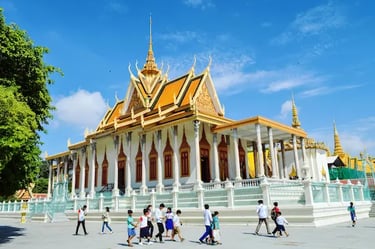
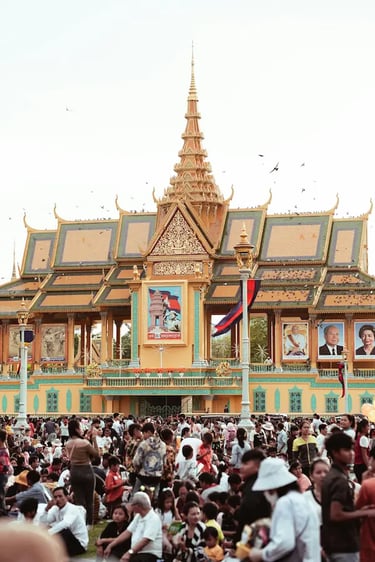
After the emotional intensity of the memory sites, it is vital to reconnect with Cambodia’s living heritage—magnificently represented by the Royal Palace and the Silver Pagoda. The Palace, still the official residence of King Norodom Sihamoni, symbolizes national unity and the continuity of the monarchy despite political upheaval. Its classic Khmer architecture—shimmering golden roofs, pointed prangs, and immaculate walls—offers a striking contrast to the busy streets outside. Inside, the complex feels like an oasis, with meticulously kept gardens and a series of stunning buildings. The site’s importance goes far beyond aesthetics: it is an anchor of the Theravada Buddhist faith, which shapes Cambodian daily life, and a reminder of the royal history that continues to play a role in the nation’s identity. Visiting the Palace is a breath of fresh air—a reaffirmation of Cambodia’s deep cultural spirit and the pride of the Khmer people.

The Throne Hall (Preah Tineang Tevea Vinichhay)

The beating heart of the complex, the Throne Hall is the most impressive structure, recognizable by its 59-meter roof topped with a Khmer-style prasat. Used for royal ceremonies, coronations, and official audiences, it embodies the dignity of the monarchy. Although access inside is rare, viewing it from outside allows visitors to appreciate its scale and grandeur. Colorful murals depict scenes from the Reamker (the Cambodian version of the Ramayana), highlighting Cambodia’s cultural ties to India and Thailand and the continuity of its narrative traditions.

The Silver Pagoda (Wat Preah Keo Morakot)

Officially called the “Temple of the Emerald Buddha,” it is universally known as the Silver Pagoda, a name derived from its floor—over 5,000 solid silver tiles, each weighing more than a kilo, though only a small section is left visible to prevent wear. The temple houses priceless treasures, including a Baccarat-crystal Emerald Buddha and a life-size Maitreya Buddha statue covered in over 9,584 diamonds, the largest a stunning 25 carats. This material splendor is a testament to the monarchy’s longstanding support of Buddhist institutions.

Gardens and Walls: A Sanctuary of Serenity

In contrast to the hectic boulevards outside, the palace gardens are an oasis of calm. Filled with tropical flowers, miniature stupas, and statues of mythical animals, they offer a moment of rest and contemplation. The cleanliness and order of the space stand in stark contrast with the joyful chaos of the city, symbolizing the tradition and structure that the monarchy strives to maintain. It’s also a wonderful place to observe saffron-robed monks moving peacefully between temples, a reminder of the central role of religion in Cambodian daily life.

4. Phsar Thmey: Turbulence, Trade, and Art Deco

The Central Market, or Phsar Thmey (“the new market”), is the most striking expression of Phnom Penh’s economic vitality and organized chaos. Beyond its commercial function, the building is an architectural marvel. Built in 1937 during the French Protectorate, its massive yellow Art Deco dome—one of the largest of its time—is a true emblem of the city. Designed in the shape of a cross, the structure radiates outward from the central dome, offering four distinct wings and a bright, naturally lit core. Experiencing Phsar Thmey is a multisensory immersion: the smell of spices, the clinking of jewelry, the constant hum of conversations, and the dazzling colors of the stalls create a lively, unforgettable spectacle. It’s the perfect place to dive into local daily life, as residents shop, eat, or socialize far from the typical tourist circuits. This market is much more than a shopping stop—it’s a genuine microcosm of Cambodian society.

A French Architectural Masterpiece

The reinforced concrete structure of Phsar Thmey is a remarkable example of French colonial architecture, blending modern engineering with sophisticated design. Its innovative domed construction allowed for natural ventilation and ample light. Today, the dome stands as a compulsory reference point for architecture enthusiasts and a reminder of the Protectorate era. The contrast between the massive columns, the Art Deco motifs, and the bustling merchants is a perfect metaphor for Cambodia’s history—a blend of ancient traditions and foreign influences.

Gold and Flavors: A World of Market Stalls

The market naturally divides itself into zones. Under the central dome, you’ll find gold and silver jewelry, local gemstones, and watches—often sold after enthusiastic bargaining. In the wings of the cross-shaped structure, the offerings shift to clothing, Angkor-themed tourist souvenirs, and electronics. But the most interesting area for travelers is often the food section. Street-food stalls serve steaming bowls of kuy teav, fresh exotic fruits, and local desserts made with sticky rice and coconut milk.

The Art of Bargaining and Observing

Visiting Phsar Thmey means embracing the art of bargaining—an essential part of the shopping experience in Southeast Asia. Prices are rarely fixed, and polite negotiation, ideally with a smile, is expected. Beyond shopping, the market is a prime observation point. Watching the interactions between vendors, the clever ways goods are stacked, and the family-run stalls offers a rich cultural immersion. It’s the perfect place to grasp the relentless rhythm and ingenuity of local commerce.

5. Practical Tips: Navigating the Capital’s Chaos

To make your stay in Phnom Penh enriching and stress-free, good logistical preparation is key. While the city is smaller than many other Asian capitals, its dense traffic and still-developing infrastructure can be disorienting. Your choice of transportation and neighborhood will greatly influence your experience. Planning your itinerary—especially for emotionally intense visits like S-21 and Choeung Ek—will help you manage your time and give yourself mental space to process what you see. Finally, understanding basic safety tips and local customs is essential for a respectful and smooth immersion. The city is generally welcoming, but like any metropolis, basic vigilance is important, particularly in tourist-heavy areas or crowded markets where pickpockets may operate.

The Transport Duel: Tuk-Tuk vs. Grab

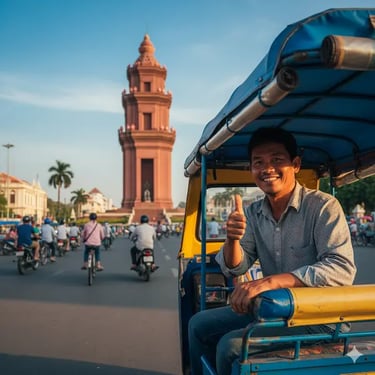
The tuk-tuk is Phnom Penh’s iconic mode of transport. Agreeing on a price before hopping in is essential to avoid surprises. However, the arrival of the Grab app (the regional equivalent of Uber for tuk-tuks and cars) has made life much easier for travelers. Grab offers fixed, transparent pricing—eliminating negotiation—and often provides a faster ride. For longer excursions, like Choeung Ek, it’s best to negotiate a full-day tuk-tuk driver who will wait for you, or use Grab for a scheduled round trip. For short distances between nearby attractions, the classic tuk-tuk remains an unmissable experience.

Where to Stay: BKK1 and Riverside

Your choice of accommodation depends on your travel style. BKK1 (Boeung Keng Kang 1), home to embassies and expatriates, offers high-end hotels, trendy cafés, and excellent international restaurants. It’s quieter and more spacious. In contrast, the Riverside (Sisowath Quay) is ideal for travelers who enjoy lively atmospheres. It’s central, close to the Royal Palace, Wat Phnom, and the riverfront promenade. It’s also a nightlife hub, with rooftop bars and easy access to night markets and river taxis.

Sightseeing Rhythm and Planning

Given the emotional heaviness of visiting Tuol Sleng and Choeung Ek, it’s strongly recommended not to combine them with other major visits in the same day. An ideal itinerary might be: morning at Tuol Sleng, lunch break, then afternoon at Choeung Ek. The next day, focus on the city’s “lighter” aspects: the Royal Palace in the morning (to avoid midday heat) and the Central Market in the afternoon. This balance allows you to appreciate Phnom Penh’s present-day beauty without letting the weight of past events overshadow the experience.

6. 🌐 Context and Geography: Cambodia at the Heart of Asia

A journey through the Khmer Kingdom doesn’t end at the gates of Siem Reap or Cambodia’s bustling capital, Phnom Penh. To truly understand this Asian nation, it must be placed within its Indochinese context, bordered by Vietnam and Thailand (Bangkok often being a gateway for travel to Cambodia). The legacy of the Khmer Empire still shines, especially through the majestic Angkor temples and the monumental Angkor Wat—the ultimate symbol of Cambodian civilization. Yet the country is also profoundly marked by the recent history of the Khmer Rouge, whose impact remains palpable in the Cambodian population, including in cities like Battambang and its surrounding rice fields. Today, under the authority of the King of Cambodia and Cambodian state institutions, the country continues to rebuild itself, supported by its deeply rooted Buddhist traditions. Whether you choose to travel to Cambodia to explore the Angkor temples, visit the National Museum in Phnom Penh, discover floating villages, or relax in Kep, every step of your Cambodian journey is an encounter with authentic smiles and landscapes that testify to the richness of Khmer origins. Understanding the nation’s complexity is your greatest asset for traveling through it with confidence.

Conclusion: Phnom Penh Beyond the Postcard

Phnom Penh is a necessary step, the one that gives body and soul to your Cambodian journey. First, it asks something of you: the effort to confront heartbreaking history—the silences of Tuol Sleng (S-21) and the immensity of loss at Choeung Ek. These places are not attractions; they are foundations of the respect owed to the Khmer people.

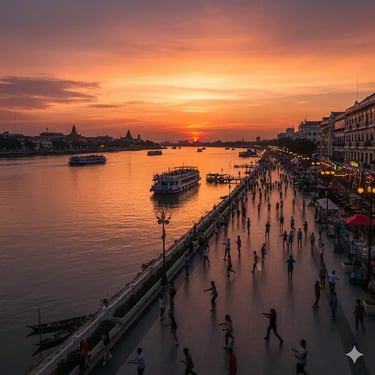
But the capital then offers its greatest reward: proof of its rebirth. Between the splendor and order of the Royal Palace, the sensory chaos and energy of Phsar Thmey, and the gentle nighttime buzz along the Mekong, Phnom Penh is a powerful testament to resilience. The city delivers a vibrant message of hope and vitality that sharply contrasts with its past.

This stop in the political and historical heart of Cambodia is the moment of maturity. You have seen the wonder of Angkor, digested the history of the capital. Now, Cambodia invites you to relax, slow down, and discover softer, more tranquil facets of its land.

❓ FAQ: Preparing Your Trip Through Cambodia

1. What is the best time to travel through Cambodia and avoid the rains?

The best time to plan your trip to Cambodia is generally between November and March, during the dry season. The rainy season runs from May to October and, although showers can be intense, they are often brief—and the rice-field landscapes are stunning. For exploring ruins and enjoying beautiful sunsets without the discomfort of humid heat, the dry season is ideal.

2. What are the must-see sites besides Angkor Wat?

Beyond the vast archaeological complex of Angkor Wat and the many Angkor temples (the jewel of UNESCO World Heritage), the key destinations include Phnom Penh (Cambodia’s capital), the beaches of Sihanoukville, and the island of Koh Rong. Don’t overlook Battambang, known for its colonial charm and traditional stilt houses. These places offer a diverse glimpse into Cambodian culture.

3. Should you venture off the beaten path?

Yes—absolutely! While the major sites are unmissable wonders, venturing beyond the classic routes (such as a tailor-made trip to lesser-known temples or a cruise on the Mekong) will enrich your experience. It allows you to discover genuine Cambodian hospitality in local guesthouses, observe elephant conservation work (if visiting an ethical sanctuary), and explore forgotten ruins.

4. How do transportation and the local currency (Riel) work?

The riel is the official currency, but the US dollar is widely accepted—and often preferred—throughout the country. For transportation, you can negotiate with tuk-tuk drivers or use ride-hailing apps. For long distances, buses and taxis are convenient for reaching the Cambodian–Laos border or the borders with Thailand or Vietnam. Keep small riel notes on hand for minor purchases.

5. Are there Angkor temples worth visiting outside the main circuits?

Absolutely. In addition to the famous ones (like Angkor Wat and Bayon), you’ll find peaceful alternatives in more remote sites that showcase the ancient grandeur of the Khmer Empire—such as Banteay Srei. These temples often offer intimate sunset views, far from the crowds, making the experience more meditative. It’s the perfect opportunity to wander beyond the main highlights and explore deeper into Angkor’s heritage.

  1. The Hook and the Start of the Journey: Cambodia, Much More Than a Destination.

  2. The Majesty of History: Angkor Wat, How to Avoid the Crowds.

  3. The Beating Heart and the Memory: Phnom Penh, Between Past and Urban Renaissance.

  4. The Gentle Escape: Slow Travel in Kampot and Kep (Pepper, Beaches, and Rice Fields).

  5. Culture, Cuisine, and Conclusion: The True Taste of Cambodia and Responsible Tourism

Part 3: Phnom Penh