Part 5: Culture, Cuisine, and Conclusion (The Essential)
The True Taste of Cambodia: Amok, Lok Lak, Khmer Kindness, and Ethical Tourism Tips. End your Asian Journey on a Responsible Note.
BLOG CAMBODIA
12/9/202510 min read


PART 5: CONCLUSION
Culture, Cuisine, and Conclusion: The True Taste of Cambodia and Responsible Tourism
1.Hook and Start of the Journey: Cambodia, Far More Than a Destination
2.The Majesty of History: Angkor Wat and How to Avoid the Crowds
3.The Beating Heart and Living Memory: Phnom Penh, Between Past and Urban Renaissance
4.A Gentle Escape: Slow Travel in Kampot and Kep (Pepper, Beaches, and Rice Fields)
5.Culture, Cuisine, and Conclusion: The True Taste of Cambodia and Responsible Tourism
🇰🇭 Cambodia: Far More Than the Temples of Angkor
The Promise of a Land of Resilience
Welcome. If you are reading these lines, it means you’re ready to lift the veil on one of the most fascinating and moving countries in Southeast Asia: Cambodia. Far from being just a simple stop between Vietnam and Thailand, the Kingdom of Cambodia — or the Land of the Khmers — is a destination in its own right, a place where history, culture, and human resilience meet at every street corner.
We’ve prepared a complete five-part guide for you, designed not only to showcase the must-see sites but, more importantly, to encourage you to travel differently. At ASIA ON THE WAY, our goal is not to give you a rigid itinerary, but to offer you the keys to understand, respect, and connect with this land known for its unique smile.
Cambodia is a destination of striking contrasts. It is the millennial silence of lost cities, the vibrant energy of Phnom Penh, and the serenity of the South’s isolated beaches. It’s a country that grabs you by the gut, forces you to remember its painful past, while flooding you with the unwavering optimism of its people.
Absolutely. I will write Part 5: Culture, Cuisine and Conclusion for your article on Cambodia, respecting the title, the specified content, and your excellent formatting guidelines for ASIA ON THE WAY.
Here is the structured and written content, ready to be integrated into your blog:
1. The True Taste of Cambodia: Amok, the Smile, and Responsible Tourism
Cambodia is not only a land of ancient history; it’s also a destination that awakens the senses—from the gentleness of its people to the subtle flavors of its cuisine. This final part is dedicated to the human experience, to sharing, and to the simple gestures that will turn your trip into a responsible and memorable journey.
The Gourmet Section: Our Favorite Dishes
While Cambodian cuisine shares influences with its neighbors (Thailand and Vietnam), it has developed a unique identity—often less spicy and more delicate—generously using lemongrass, galangal, and the famous Kroeung (a paste of spices and aromatic herbs).
Amok: The Star of Khmer Cuisine
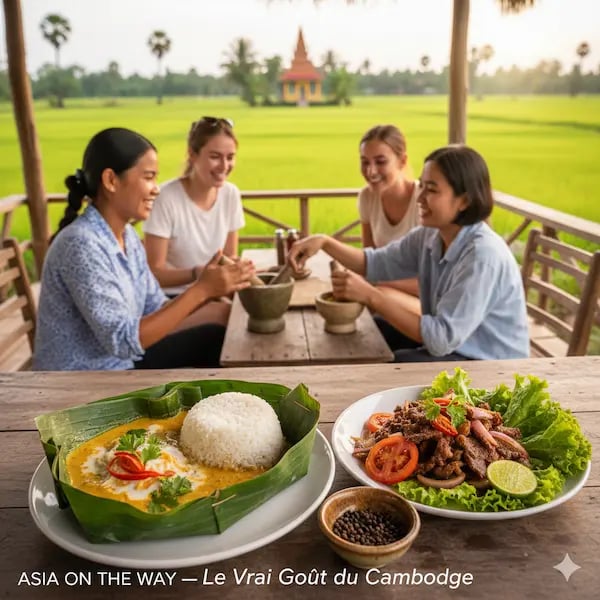
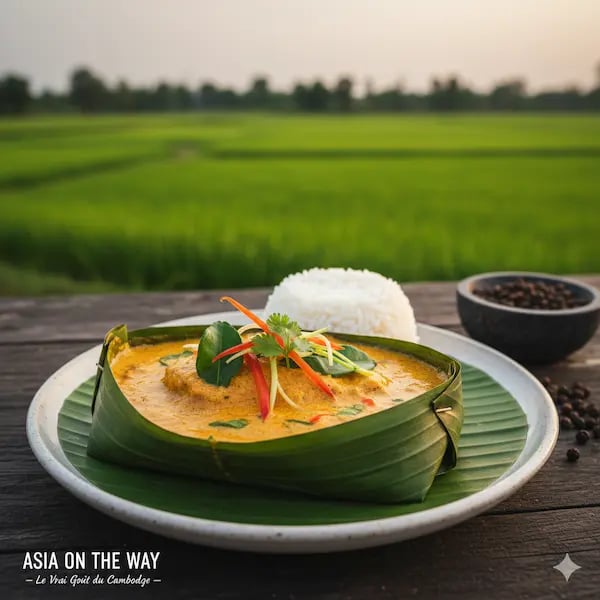
Amok is the national dish, an absolute must-try. Picture a fish curry (often sea snakehead, catfish, or chicken) steamed with coconut, Kroeung, and an egg, traditionally served in a banana leaf.
The secret of Amok lies in its texture: it must be creamy and mousse-like, not liquid like a classic curry. It’s a symphony of softness and aromas, a comforting dish that warms the heart.
Lok Lak: Simplicity with Intense Flavor
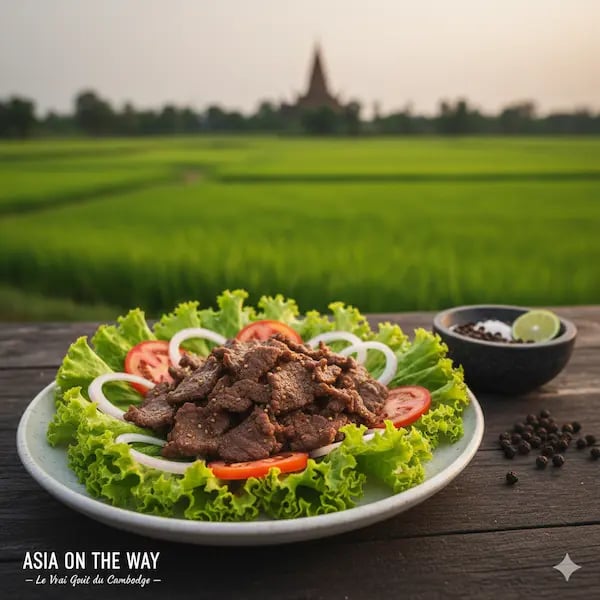
Lok Lak is the “safe bet” for any traveler. These are marinated, stir-fried beef cubes served on a bed of lettuce, tomatoes, and onions.
The trick? The sauce that comes with it: a mix of salt, Kampot pepper (the star!), and lime juice. Dip each piece of beef into this explosive blend for the perfect tasting experience.
Why Take a Cooking Class?
It’s an activity we highly recommend, especially if you’re staying in Siem Reap or Phnom Penh.
Understanding Ingredients: Learn to prepare your own Kroeung, the soul of Khmer cuisine.
Supporting Locals: Many of these classes are run by families or small schools that reinvest the funds into the community.
A Lasting Souvenir: There’s nothing quite like making an Amok at home to relive a bit of Cambodia!
2. The Human Factor: The Dignity and Smile of the Khmer People
What strikes travelers most in Cambodia—beyond the grand temples—is the resilience, hospitality, and gentleness of its people, often described as having an unwavering smile.
A Historical Resilience:
Despite the tragedy of the Khmer Rouge and a painful recent past, the Khmer people show exceptional dignity and strength of character. This ability to look toward the future while honoring memory is palpable in every interaction.
The Art of Welcoming (Suesday and Akon):
Hospitality isn’t just politeness; it’s a deep cultural value. Learning a few Khmer words, such as “Suesday” (hello) or “Akon” (thank you), is immediately rewarded with a sincere smile and opens the door to more meaningful exchanges.
Authentic Encounters:
Real travel is found in human connections. Choosing small family-run guesthouses, small restaurants, or independent tuk-tuk drivers not only supports the local economy but also allows you to share daily moments far from sanitized tourist areas.?
3. Ethical Commitment: For Responsible and Beneficial Tourism
Traveling in Cambodia involves awareness of the impact of our choices. Ethical tourism is essential to ensure that your presence becomes a positive force for the community and the environment.
Supporting the Local Economy:
Choosing to spend your money in small establishments rather than international chains is crucial. This ensures that funds directly benefit Khmer families and contribute to building a stable, independent middle class.
Sensitivity to Social Causes:
It is imperative to avoid the pitfalls of “pity tourism,” especially orphanage visits that can perpetuate harmful cycles. Support should go to well-identified NGOs or social enterprises that offer sustainable and transparent help.
Minimal Ecological Impact:
Simple choices such as refusing plastic bags, using a reusable water bottle, and managing waste responsibly have concrete effects. Every traveler has a role in preserving Cambodia’s natural beauty for future generations.
4. Cultural Heritage and Local Handicrafts
Khmer culture, heir to the Angkorian Empire, remains visible and alive through its traditional arts, crafts, and daily rituals, offering travelers unique opportunities for connection and meaningful purchases.
The Art of Silk and Weaving:
Cambodia has a rich tradition of silk and cotton weaving, often done by hand in villages where techniques are passed down through generations. Buying scarves or clothing directly from cooperatives helps preserve this delicate craft against mass-produced competition.
Apsara Music and Dance:
Apsara dance is the country’s most iconic artistic expression, depicted on the walls of Angkor’s temples. Attending a performance (often tied to programs supporting artists and culture) allows you to appreciate the beauty and complexity of this tradition, as well as understand part of the spiritual history of the Khmer people.
The Meaning of Purchases:
Every handmade object in Cambodia tells a story. Whether it’s wood carvings, handcrafted silver jewelry, or products derived from the famous Kampot pepper, choose shops that detail the origin of items, guaranteeing fair compensation for artisans.
5. Beyond the Itinerary: Spiritual and Emotional Cambodia
A trip to Cambodia is rarely just a series of visits; it is often a journey of personal transformation, marked by Buddhist spirituality and awareness.
The Influence of Theravada Buddhism:
Buddhism is deeply rooted in Khmer daily life. Saffron-robed monks, colorful pagodas, and offerings are omnipresent. Observing this spirituality—and respectfully visiting a temple (always cover shoulders and knees)—offers insight into the calm and philosophy that shape local culture.
The Weight of Memory:
Visiting sites related to the Khmer Rouge era (Part 3) is emotionally demanding but essential. It is not voyeurism, but a duty of remembrance. Confronting this painful history is vital to appreciating the light and joy present in today’s Cambodia, emphasizing the value of peace and resilience.
The Final Reflection:
In conclusion (Part 5), the aim is to synthesize this duality: the beauty of temples contrasted with the horror of history, poverty contrasted with immense human richness. Cambodia invites deep introspection about the meaning of History and the role of the traveler.
✨ Conclusion: Cambodia, A Mosaic of Emotions
We’ve reached the end of this complete guide, and our hope at ASIA ON THE WAY is that Cambodia now remains in your mind as a rich, complex, and profoundly human destination.
From the initial Hook that reminded us this country is Far More Than a Destination (Part 1), to the delicate flavor of Amok and the importance of Responsible Tourism (Part 5), your journey will be one of contrasts.
Light and Shadow
We began with the Majesty of History (Part 2): the magnificence of Angkor Wat. By learning How to Avoid the Crowds, you now have the tools to experience the unique spiritual atmosphere of this vanished civilization, marveling at stone and jungle.
Then we dove into the complexity of the country’s Beating Heart (Part 3). Phnom Penh invited us into a duty of remembrance—demanding but necessary—while showing us its Urban Renaissance: a dynamic city full of hope and creative energy.
Finally, we slowed the pace with the Gentle Escape (Part 4). The rice fields and peaceful beaches of Kampot and Kep proved that Cambodia excels at Slow Travel, far from the noise, with peppered crab and rediscovered tranquility.
What Truly Matters
The common thread of this journey, detailed in Part 5, is the human element. It’s the kindness of the Khmer people, their resilience after darkness, and their ability to welcome the world with a disarming smile.
Cambodia is a life lesson. It offers you History, gastronomy (don’t forget to try Amok and Lok Lak), adventure, and—above all—the opportunity to travel with positive and lasting impact.
It’s a destination that promises to leave you with a deeply emotional imprint.
✨ So, after exploring all the facets of Cambodia, what will be the first step of your journey: quiet reflection in Angkor, or the gentle way of life in Kampot?
The Hook and the Start of the Journey: Cambodia, Much More Than a Destination.
The Majesty of History: Angkor Wat, How to Avoid the Crowds.
The Beating Heart and the Memory: Phnom Penh, Between Past and Urban Renaissance.
The Gentle Escape: Slow Travel in Kampot and Kep (Pepper, Beaches, and Rice Fields).
Culture, Cuisine, and Conclusion: The True Taste of Cambodia and Responsible Tourism
📍 ASIA ON THE WAY – Practical Travel Guide to Asia
🌐 Website: asiaontheway.com
📧 Email: contact@asiaontheway.com
💬 Personalized advice, tailor-made itineraries, and local tips for traveling differently in Asia — all year round, even off-season.
We’ve reached the end of this complete guide, and our hope at ASIA ON THE WAY is that Cambodia is now etched in your mind as a rich, complex, and deeply human destination. Get ready to Travel to Cambodia and discover the Khmer Kingdom in all its splendor.
From the very first Hook that reminded us this country is Far More Than a Destination (Part 1), to the delicate flavor of Amok and the importance of Responsible Tourism (Part 5), your Cambodia Tour will be a journey filled with contrasts.
Light, Shadow, and Spiritual Heritage
We began with the Majesty of History (Part 2): the magnificence of Angkor Wat. This archaeological complex is a UNESCO World Heritage treasure. By learning How to Avoid the Crowds, you now have the keys to Visit the Temples of Angkor and uncover the power of the Khmer Empire, marveling at the Ruins and Remains dedicated to the Buddha. The Visit of the temples reveals Elephant carvings and divine figures, witnesses of a glorious past.
Then we dove into the complexity of the country’s Beating Heart (Part 3). Phnom Penh, the Capital of Cambodia, invited us to a duty of memory while showing us its Urban Renaissance. There, you’ll discover the splendor of the Royal Palace and the omnipresence of Pagodas, symbols of spirituality for Cambodians. It’s also where you’ll exchange your currency for Riel.
The Essence of Asian Travel
We slowed the pace with the Gentle Escape (Part 4). The rice fields and peaceful beaches of Kampot and Kep proved that Cambodia excels in Slow Travel. This region, like Battambang, is dotted with houses on Stilts and Floating Villages unique in Indochina. The country, which shares strong historical ties with Laos Cambodia (and neighboring Thailand), offers you a truly Asian experience. Whether you travel during the Rainy Season or not, every moment is a discovery.
The common thread of this journey, detailed in Part 5, is the human aspect. Cambodians are the soul of this nation, bearing the historic names Khan and Sen or the title Kong. Traveling in Cambodia is a life lesson that offers you history, gastronomy, adventure, and the opportunity to make a positive impact.
To visit this country, you simply need to open your heart to its richness.
Essential FAQ: Key Questions for Your Travels in Cambodia
1. How can I avoid tourist crowds and visit the temples of Angkor?
To enjoy the wonders of the Angkor Temple without tourist crowds, plan your Sunrise at lesser-known sites. Choose Off-the-beaten-path itineraries and remote trails for majestic discoveries. Consider an Excursion to step away from the classic circuit.
2. What is the best time to plan a Tailor-made Trip?
The Dry Season (November to April) offers the most pleasant climate for beaches and sightseeing. However, for a tailor-made cultural trip, the shoulder season is ideal, as there are fewer people. This Asian Country is beautiful all year long!
3. Where to enjoy seaside life beyond Sihanoukville?
While Sihanoukville is the main hub, head to the paradise islands like Koh Rong. These beach destinations offer the perfect escape after a Trek or an intense visit to the National Museum in Phnom Penh.
4. Is it possible to take a Cruise or a combined Vietnam–Cambodia tour?
Yes, River Cruises on the Mekong are an excellent way to connect Vietnam and Cambodia. These combined Cambodia tours offer a unique perspective, letting you experience both Vietnamese and Khmer cultures at once.
5. What can I do to respect the culture and the environment?
Support local Guesthouses and avoid tours exploiting Elephants. Visit Pagodas respectfully (proper attire is required) and, for health matters, check recommended Vaccinations with your Embassy before departure.
6. What should Travellers know about exploring Tonle Sap and the Cambodian Countryside?
The Tonle-Sap lake is a unique ecosystem in South East Asia, famous for its floating villages and seasonal water changes. Travellers can visit Kampong communities to observe traditional life in the countryside, where wooden houses, rice paddies, and carved wooden boats offer an authentic view of Kampuchea. Bring small bills in USD for local purchases, and remember that this region remains one of the most culturally intact in Se Asia.
7. Which ancient Monuments should I visit besides Angkor Wat Temple?
Beyond the iconic Angkor Wat Temple, you should explore Angkor Thom, the last great capital of the Khmer reign, known for its massive gates and mysterious smiling statues. The atmospheric Ta Prohm, overgrown with giant roots, is a favorite among Travellers seeking a jungle experience. Don't miss the Terrace of the Elephants and the Royal Courtyard, all part of a vast World Heritage Site featuring Hindu and Buddhist temple architecture inspired by both Hinduism and local spirituality.
8. Is it easy to travel around Cambodia and the rest of Southeast Asian countries?
Yes. Cambodia is well connected to major hubs in South East Asia, including Ho Chi Minh City, Bangkok, and Vientiane. The international airport in Phnom Penh and Siem Reap makes movement across Asean countries simple. Long-distance buses also link Cambodia with Vietnam, Laos, and Burma, making it easy for any Traveller to continue their journey through East-Asia or the broader Southeast Asian region.
9. Are there important historical sites related to Cambodia’s modern history?
Absolutely. The Killing Fields near Phnom Penh are among the most somber monuments in Asia, offering a powerful reminder of the country’s tragic genocide under the Khmer Rouge. Many Travellers visit these sites along with the Tuol Sleng museum to better understand Cambodia’s recent past. These monument complexes are emotionally intense but essential for appreciating the resilience of the Khmer people.
10. What cultural experiences should I not miss during my stay?
In addition to temple visits along the Mekong River, don’t miss a stroll through a local night market to enjoy street food, crafts, and music. Travellers who love history should also explore influences shared with neighboring countries like Luang-Prabang in Laos or ancient cities in Burma. Cambodia’s mix of Hindu, Buddhist, and indigenous traditions makes it one of the most fascinating destinations in South East Asia.
Travel
Asia Blog – Practical tips about Vietnam, Thailand, South Korea, Cambodia... visas, eSIMs, banking, travel budget, and more.
© 2025. All rights reserved.