Central China: Shaolin, Wudang, and Yangtze River Cruise
The ultimate cultural shock! From Shaolin Kung Fu to the Wudang temples, dive into the heart of Chinese history and end your journey with an epic Yangtze River cruise.
BLOG : CENTRAL CHINA
1/9/202612 min read
Central China: A Cultural Shock Between Power and Spirituality
After the visual wonder of the Avatar mountains, I thought I had captured the essence of China. I was wrong. Venturing into the heart of the country, where the provinces of Henan and Hubei echo with the call of history, I was hit full force by what I now call "Cultural Shock."
Here, the journey takes on a new dimension. You don't come just to gaze at landscapes; you come to confront millennia of belief, discipline, and grandeur. In this second part of our journey, I’m taking you where the body and mind become one:
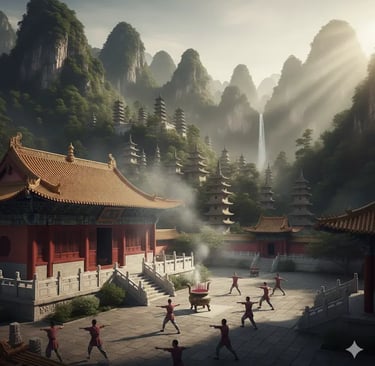
We will vibrate to the rhythm of the kiai shouts from the Shaolin Temple monks.
We will climb the sacred steps of the Wudang Mountains in pursuit of the Taoist breath.
We will stand speechless before the thousands of stone gazes in the Longmen Grottoes.
Before letting ourselves be carried by the tranquil power of the Yangtze River through its mythical gorges.
Get ready: Central China is not just a stopover; it is a brutal and magnificent immersion into the soul of an empire.
Chapter 1: The Shaolin Temple – Diving into the Heart of the Myth 🥋
The official name is the Shaolin Monastery (少林寺 - Shàolín Sì). This is where Kung Fu was born and where Chan Buddhism (which would become Zen in Japan) took root. But be aware: it’s not just a temple; it’s a massive national park.
📍 Where is it exactly?
The temple is located in Henan Province, Central China, at the foot of Mount Song (Songshan).
Closest City: Dengfeng (15 minutes away).
Gateway Cities: Luoyang (31 miles / 50 km) or Zhengzhou (56 miles / 90 km).
🚄 How to get there?
There is no train station directly at the temple. Here are your options:
From Luoyang (Recommended): Direct buses from the Luoyang Central bus station (approx. 25 RMB).
From Zhengzhou: Buses from the Zhengzhou Central bus station (approx. 30 RMB).
Taxi/Didi: Expect to pay around 180 RMB ($25) from Luoyang for total comfort.
🔗 Useful Link: To check train schedules to Luoyang or Zhengzhou, use Trip.com (very reliable in China).
👤 Should you hire a guide?
It is not mandatory, but highly recommended to understand the history behind the frescoes.
On-site: Official guides offer their services at the entrance ticket window.
Online: You can book a day trip with an English-speaking guide through platforms like Viator or GetYourGuide.
⛩️ Key Highlights of the Visit
Kung Fu Schools: You will pass by massive stadiums where thousands of students train. It is visually breathtaking! 😲
The Monastery: Look at the stone floor slabs, indented by the feet of monks after centuries of training.
The Pagoda Forest (Talin): The mystical cemetery of the ancient masters.
Sanhuanglian Cable Car: For a bird's-eye view of the sacred cliffs. 🚠
🍱 Where to eat? Restaurants and Specialties
The area is touristy, but you can eat well:
Shaolin Vegetarian Hall: Located right next to the temple, this is the ultimate experience to taste "monk cuisine" (tofu, mushrooms, lotus roots). 🥗
In Dengfeng: Look for small restaurants serving Hui Mian (typical Henan lamb noodles). A delight for just a few dollars.
Street Food: Throughout the site, you’ll find roasted sweet potatoes and hot corn on the cob.
💰 Detailed Budget
Entrance Fee: 80 RMB ($11).
Cable Car: 100 RMB ($14) round trip.
Internal Electric Shuttle: 15 RMB (to save yourself a 1.2-mile / 2-km walk).
🛌 Where to stay? My Recommendations
Two options depending on your travel style:
In Dengfeng (Practical): Ideal for being as close to the temple as possible.
My Choice: Chanwu Hotel – A massive martial arts-themed hotel, a truly unique change of scenery.
In Luoyang (Strategic): Perfect if you also plan to visit the Longmen Grottoes (next chapter!).
Top Pick: Luoyang Christian's Hotel – Great location and very accustomed to international travelers.


Chapter 2: The Wudang Mountains – The Breath of the Tao ✨
If Shaolin is the heart of "external" Kung Fu, the Wudang Mountains (武当山 - Wǔdāng Shān) are the birthplace of "internal" arts like Tai Chi. A UNESCO World Heritage site, this mountain range is dotted with spectacular monastic complexes clinging to the cliffs. This is where travelers come to seek the perfect balance between Yin and Yang.
📍 Where is it exactly?
The Wudang Mountains are located in Hubei Province, Central China.
Closest Town: Wudangshan (formerly Laoying).
Major Gateway City: Shiyan (about a 1-hour drive).
🚄 How to get there?
It is much more accessible than it used to be, thanks to the high-speed rail network:
By Train (Gao Tie): There is a dedicated station named Wudangshan West (武当山西). It connects directly to Wuhan (2 hrs), Xi'an (1.5 hrs), and even Beijing (5 hrs).
From the Station: Shuttle buses and taxis (Didi) will take you to the entrance of the tourist zone in 15–20 minutes.
🔗 Useful Tip: Book your train tickets in advance on Trip.com to guarantee a seat in Second Class (which is very comfortable).
👤 Do you need a guide?
Less necessary than in Shaolin: The experience here is more contemplative, and the trails are very well-marked.
The benefit: A guide can be useful if you want to visit more "hidden" temples or meet genuine masters for a Tai Chi initiation.
⛩️ Must-See Highlights
The Golden Summit (Jingding): The highest point at 1,612m (5,288 ft). An entire temple made of gilded bronze that seems to touch the sky. You can reach it on foot (a 3-hour climb) or by cable car. 🚠
Nanyan Temple (South Cliff): The most visually stunning. The structures are literally embedded into the rock face over a vertical drop. Don't miss the famous dragon-head incense burner overlooking the abyss.
The Valley of 24 Ravines: Perfect for a peaceful walk among waterfalls and ancient forests.
Witnessing a Tai Chi Class: You will often see practitioners in white robes practicing on the esplanades at sunrise. It is a moment of absolute grace. ✨
⏳ How long should you stay?
2 days / 1 night: This is the ideal format. Staying overnight on the mountain allows you to experience the mystical morning atmosphere before the day-trip tourists arrive.
🍜 Food: Health and Longevity
Wudang cuisine follows Taoist principles: balanced and energetic.
River Fish: Often prepared with local medicinal herbs.
Mountain Vegetables: Bamboo shoots, wild mushrooms, and Goji berries.
Where to eat: There are many small guesthouses on the mountain serving excellent home-cooked family meals.
🛌 Where to stay? My experience
To truly live the experience, stay on the mountain rather than in the town at the base.
Immersion Option: Wudangshan Qiongtai Hotel – Located right next to the cable car station, perfect for heading to the summit at dawn.
Comfort Option (at the base): Jianguo Hotel Wudangshan – A high-end establishment located at the park entrance.
💰 Detailed Budget
Park Entrance: Approx. 240 RMB ($34), which includes unlimited internal shuttle buses (valid for 48 hours).
Cable Car: 80–90 RMB ($12) depending on the direction.
Mountain Accommodation: Expect to pay between $45 and $100 per night.
Chapter 3: The Longmen Grottoes – The Gaze of Eternity 🗿
A UNESCO World Heritage site, the Longmen Grottoes (龙门石窟 - Lóngmén Shíkū) represent the pinnacle of Buddhist art in China. Imagine more than 100,000 Buddha statues, ranging from just 1 inch to 55 feet (2 cm to 17 m) tall, carved directly into the limestone cliffs bordering the Yi River.
📍 Where is it exactly?
The grottoes are located about 7.5 miles (12 km) south of Luoyang, in Henan Province. It is the perfect next stop after visiting Shaolin.
🚄 How to get there?
This is one of the most accessible sites in China:
By High-Speed Train (Gao Tie): Arrive at Luoyang Longmen Station (洛阳龙门站). It is located only 15 minutes away from the grottoes by taxi or bus!
By Bus/Taxi from the center: Take bus 81 or 99, or order a Didi (approx. 30-40 RMB from the city center).
🔗 Useful Link: Book your train to Luoyang Longmen on Trip.com.
👤 Should you hire a guide?
Recommended: To understand why some Buddhas are missing their heads (historical vandalism or looting) and to discover the hidden messages in the calligraphic inscriptions on the walls.
Alternative: Audio guides are available for rent at the entrance, or you can scan QR codes in front of the major caves (which often feature English translations).
⛩️ Must-See Highlights
Fengxian Temple (The Star Attraction): This is home to the massive Vairocana Buddha (17m). Legend says its features were modeled after Empress Wu Zetian. Its serene smile is truly hypnotic. 📸
The Cave of Ten Thousand Buddhas (Wan Fo Dong): Incredible precision work featuring 15,000 tiny figurines carved into the walls.
The View from the Opposite Bank: After visiting the caves, cross the bridge over the Yi River. The panoramic view of the cliff riddled with grottoes is the best spot for photos.
Night Illumination: If you visit at the end of the day, the site is sometimes lit up at night. It is absolutely magical, almost surreal. ✨
⏳ How long should you stay?
3 to 4 hours: The path is linear along the river. It is an easy and very pleasant walk.
🍜 Food: The Flavors of Luoyang
Don't leave without tasting the local cuisine:
The Luoyang Water Banquet (Shuixi): A series of 24 soup-based dishes (served hot or cold). It is the city's signature imperial specialty. 🍲
Where to eat: Around the Luoyang Old Town (Lijingmen), the atmosphere is fantastic in the evening for enjoying skewers and noodle soups.
🛌 Where to stay?
It is best to stay in Luoyang to enjoy the city's nightlife.
Comfort Choice: Courtyard by Marriott Luoyang – Modern and close to the Longmen High-Speed Railway Station.
Charming Option: Look for a "Hanfu Hotel" in the Old Town if you want to be in the heart of the historic district's animation.
💰 Detailed Budget
Entrance Fee: Approx. 90 RMB ($13). The ticket includes access to the grottoes, Xiangshan Temple, and Bai Juyi’s Garden.
Electric Shuttle: 10 RMB (recommended to reach the entrance from the parking lot, which is quite far).
Chapter 4: The Yangtze River – A Journey Upon the Waters 🚢
After the spiritual and historical impact of the temples and grottoes, it is time to let yourself drift. The Yangtze (Chang Jiang) is more than just a river: it is the lifeblood of China, a force of nature winding over 3,900 miles (6,300 km). Crossing the Three Gorges is like stepping into a life-sized traditional Chinese ink wash painting.
🎬 In the Shadow of "The Sand Pebbles"
Navigating between the steep cliffs, it’s impossible not to imagine yourself aboard an old 1920s steamer, like the one helmed by Steve McQueen or Richard Attenborough. While the classic film depicted a time of tension and turmoil, today’s cruise offers absolute serenity—though you can still feel the raw power that has challenged sailors for millennia.
📍 The Classic Route: From Chongqing to Yichang
This is the most spectacular section, passing through the famous Three Gorges (Qutang, Wu, and Xiling).
Departure: Chongqing, the futuristic "mountain city." 🏙️
Arrival: Yichang, home to the titanic dam.
🚢 How to Organize Your Cruise
There are two main ways to experience the Yangtze:
Luxury Cruise (4 days / 3 nights): 5-star ships (such as the Century Cruises or Victoria Cruises fleets). Everything is included: balcony cabin, gourmet meals, and guided excursions.
Local Ferry: For budget adventurers, but significantly less comfortable and without the curated tourist stops.
🔗 Useful Link: You can compare ships and book on Yangtze River Cruises or via Trip.com.
⛩️ Must-See Stopovers
Shibaozhai Pagoda: A 12-story wooden architectural gem built against a red rock face. It appears to float on the water since the river levels rose. 🏯
The Lesser Three Gorges: You’ll leave the large ship for small boats to venture deep into narrow canyons with emerald-green waters.
The Three Gorges Dam: The largest hydroelectric dam in the world. Passing through the giant locks at night is a fascinating feat of engineering.
⏳ How Long Should You Plan For?
4 days / 3 nights: The standard duration for the Chongqing -> Yichang route (sailing with the current, which is faster).
Count 5 days for the reverse route (Yichang -> Chongqing).
🍜 Life on Board
Food is generally served as a buffet, mixing Chinese and Western cuisine.
Insider Tip: Head to the upper deck at sunset with some local tea; that is when the real magic happens. ✨
💰 Estimated Budget
5-Star Cruise: Between $450 and $750 per person depending on the season and cabin type (a private balcony is highly recommended!).
This includes accommodation, meals, and most excursions.
🛌 Where to Stay Before/After?
In Chongqing: InterContinental Chongqing Raffles City for an incredible view of the river junction before boarding.
In Yichang: Crowne Plaza Yichang, conveniently located right on the riverbank.
💡 Practical Advice for Your Discoveries in Central China
Visiting the Shaolin site or venturing into the sacred valleys of Wudang requires a minimum of organization. For each iconic monument, do not hesitate to contact the local tourist office or opt for a guided tour to unlock the secrets of each dynastie 📜. Whether it’s a stroll on the steep trails of the Taoist mountains or a contemplative walk along the lakes and gorges of the Yangtze, the faune and la flore are preserved within a vast parc naturel 🌿.
These major attractions are true sanctuaries of Chinese culture ⛩️. Note that while some spots can be easily explored in a half-day, the most scenic sites sometimes require advance booking, especially to ensure access for those with reduced mobility ♿. Visit these places with respect: this immersion in nature is a true paradise for photographers and history buffs. 📸
💡 Travel Log: Preparing Your Explorations
To fully admire the richness of these destinations, good organization is key. Whether you choose a challenging hike on the dizzying cliff faces of Mount Song or simple contemplative walks, Central China offers parks of incredible diversity 🌿. To visit each sanctuary under the best conditions, I recommend pairing your discoveries with guided tours: it is the best way to decode the remains of ancient Chinese dynasties ⛩️.
While rafting or canyoning are not yet the norm here, exploring the Yangtze gorges remains an absolutely essential full-day visit (or longer) 🚢. For lovers of botany and the great outdoors, every hiking trail is a total immersion. Finally, if you are traveling in a group, the bus remains the most common way to connect sites, but always plan to bring a picnic during your long high-altitude hikes to enjoy the mountain peace. 🥪⛰️
Conclusion: Central China, a Journey That Leaves a Lasting Impression 🏮
This second stage has been much more than just a series of visits. From the millenary discipline of the Shaolin Temple to the mystical fluidity of the Wudang Mountains, I discovered a China that does not reveal itself at first glance. It is a land of contrasts, where the stone of the Longmen Grottoes feels more alive than the concrete of the metropolises, and where the Yangtze continues to flow with the same strength as when Steve McQueen’s famous gunboat passed through.
The "Cultural Shock" I promised you—I felt it at every step. It is the feeling of being tiny in the face of history, but also of being incredibly alive at the summit of a sacred mountain or in the middle of a mythical river.
💡 Key Takeaways for Your Own Journey:
Prepare your senses: Central China is noisy, spicy, spiritual, and grandiose. Leave your prejudices at the airport.
Anticipate the logistics: The high-speed train is your best ally, but always keep a translation app (like DeepL or Google Translate) handy.
Take your time: Don't chase the sites. The true luxury here is sitting for ten minutes to watch a Kung Fu training session or the mist rising over the Three Gorges.
China is a riddle that is never truly solved, but each step of this journey has allowed me to understand a new facet. If you are looking for an adventure that challenges your certainties and amazes your eyes, Central China is waiting for you.
And you, which stage makes you dream the most? The silence of the Shaolin pagodas or the vastness of the Yangtze?
See you very soon for the next part of our adventures... Stay tuned! ✈️🇨🇳
📍 ASIA ON THE WAY – Your practical information guide to Asia
🌐 Website: https://asiaontheway.com
📧 E-mail: contact@asiaontheway.com
💬 Personalized advice, tailor-made itineraries, and local tips for traveling differently in Asia all year round, even in the off-season.
FAQ: Everything You Need to Know for Your Trip to Central China
What is the best way to visit the surroundings of the sites?
To visit the surrounding areas of vast sites like Shaolin or Wudang, the high-speed train network is excellent. Once on-site, to see the surroundings, taxis (Didi) or local buses are the simplest options. If you wish to discover hidden treasures off the beaten path, a tour of the surroundings with a private driver is recommended to save time.
What physical level is required to hike the sacred mountains?
To hike to the summits of Wudang or Mount Song, a decent level of physical fitness is required. Hikers will find very well-maintained trails, often made of stone stairs. For the more athletic, certain trail routes allow you to follow the ridges and admire the geological wonders of the region. If you prefer to avoid intense effort, cable cars provide access to viewpoints without fatigue.
Can you do sports activities like Mountain Biking (MTB) or Kayaking?
Although MTB is not yet authorized on the steep temple paths, water activities are developing. In certain calm sections of the valleys or tributaries of the Yangtze, it is possible to practice kayaking or navigate a narrow canyon to admire the limestone walls up close.
Which natural landscapes should not be missed?
The region is a true open-air national park. Unlike an Alpine glacier or a volcano, here the karst peaks and deep gorges dominate. During your visits to the surrounding areas, you will go from misty ridges to marshes bordering the blue river. It is a spectacular canyon landscape that rivals the world’s greatest natural sites.
Are there major religious monuments to visit?
Absolutely. While you won't find a European-style basilica, the region is full of imperial temples and shrines. Each sacred summit has its own buildings, often comparable to true castles of wood and stone, bearing witness to the power of ancient dynasties.
Travel
Asia Blog – Practical tips about Vietnam, Thailand, South Korea, Cambodia... visas, eSIMs, banking, travel budget, and more.
© 2025. All rights reserved.